The short answer. Three weeks, no phone for the first twenty minutes, and the honest result is that nothing dramatic happened. I was not more productive and I did not sleep better. What changed was that the day started at a pace I chose rather than one that had been chosen for me, and that turned out to be worth an alarm clock and a longer cable.
I am not going to tell you that my mornings are now silent and intentional and full of journaling. They are not. I get up, I make coffee badly, I stand at the window for a while, and then I pick up my phone and read the news like everybody else.
The only thing I changed is that the phone is not the first thing, and I did it for three weeks to see whether it was worth keeping.
The setup, which is the whole method
There is no discipline involved in what I did, because discipline is the part that fails. I changed the furniture.
The phone charges in the hallway. Not on the bedside table, not face-down on the floor next to the bed. In another room, on a cable long enough to make that possible. The cable is the entire mechanism — if it is short, you will bring the phone back within a week.
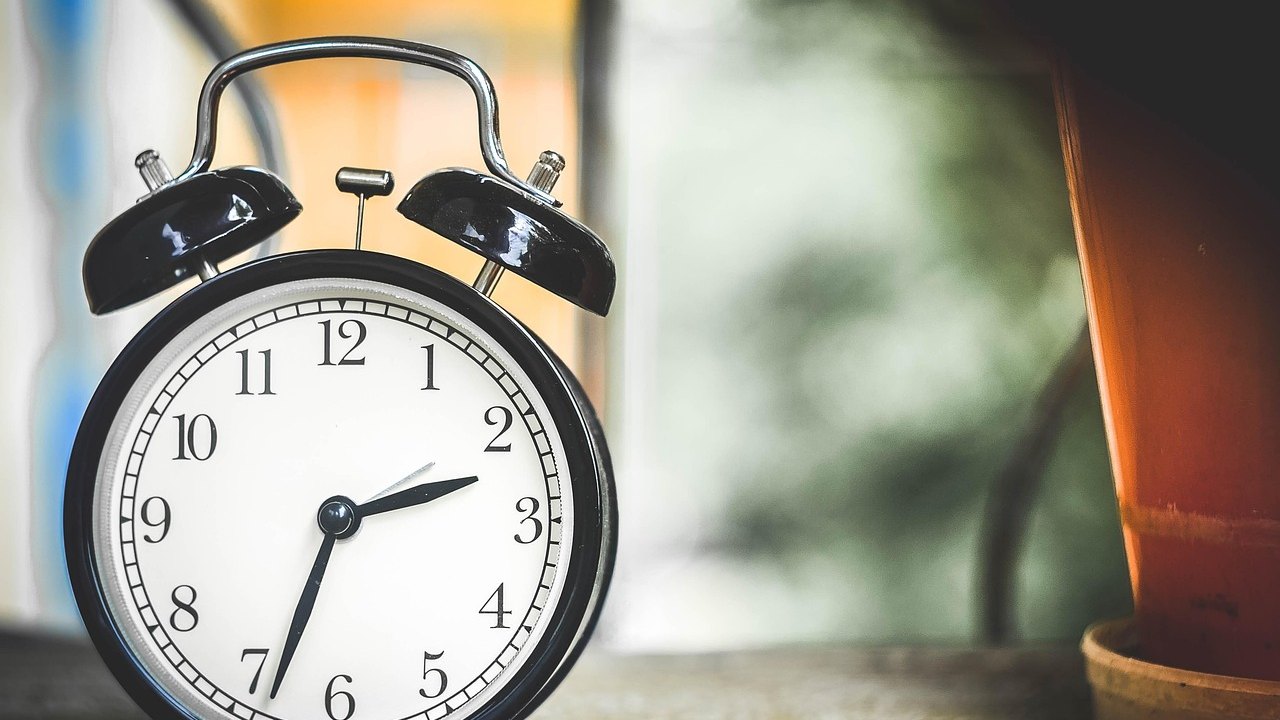
I bought an alarm clock. Fifteen pounds, battery, no wifi, no app. It wakes me up and it does nothing else, which is the specification.
I allowed the clock, not the screen. Checking the time on a phone lying face-up on the table was fine. Unlocking it was not. This sounds like a technicality and it is the opposite: unlocking is where the loop starts, and a screen that stays off cannot start it.
That is the whole system. It took about twenty minutes to set up and one purchase.
What actually happened in the first week
Twenty minutes felt like an hour. This was the surprise. Without a screen, the first stretch of the day has no edges, and I found myself checking the alarm clock at what I was sure was eleven o'clock. It was 7:40.
I noticed how much I used the phone as a filler. Waiting for the kettle, waiting for the coffee to drip, waiting for the bathroom to be free — every one of those gaps had been a phone gap. Filling them with nothing was genuinely uncomfortable for about four days.
I remembered things I had been meaning to do. Not because I was being productive, but because there was a quiet gap in which they surfaced. I wrote three of them on the back of an envelope. That is what the notebook is for, and I bought it in week two.
I was not late. I expected to be. The alarm clock works.
What did not happen
I want to be careful here, because the genre is full of claims that do not survive contact with a normal week.
I did not sleep better. The phone was in the hallway at night too, so if anything I expected an effect on sleep. There was none I could detect. The twenty minutes I changed is at the start of the day, not the end.
I was not more productive. The time did not get converted into anything. It went into standing at a window, which is not an achievement.
I did not become calmer in general. I was calmer for twenty minutes. Then the day started.
I still checked the phone at 7:21. Twenty minutes is twenty minutes. At 7:21 I picked it up and read the same things I always read. The difference is that I had already been awake and upright for a while, so the news landed on a person rather than on someone still horizontal.
Why the first twenty minutes specifically
There is a mechanical reason this slice of the day is different from the rest of it, and it does not require any claims about brains.
You are the least defended in the morning. You have not yet decided what the day is about. Whatever arrives first sets the frame, and a feed is very good at arriving first.
A feed is ordered by someone else. Not by importance to you — by engagement. So the first thing your attention is spent on is chosen to hold attention, not to be useful. That is not a conspiracy, it is just what a feed is for.
The phone in bed compresses the transition. Getting up is a change of state: horizontal to vertical, dark to light, asleep to awake. A screen in the middle of that transition means you go from lying down to reading without ever being upright and unoccupied. That gap is where the day used to start.
Nothing in the feed is time-critical. This is the part I had to check rather than assume. I went back through three weeks of messages and asked which of them would have changed anything if I had read them twenty minutes later. The answer was one, and it was about a change of time for a thing I was already going to.
The twenty minutes is not magic. It is just long enough to include the transition, and short enough that you will actually do it.
The honest costs
You need somewhere to put the phone. In a small flat, the hallway may be four feet from the bed, which is not much of a barrier. Mine is six feet and a door, and I do not trust it entirely.
You will miss things, occasionally. Nothing important happened in three weeks that I would have known about twenty minutes earlier in a way that mattered. But I did miss a message about a change of time for something, and I found out at 7:25 instead of 7:05. That is the size of the risk.
Guests think it is odd. Two people have asked why there is an alarm clock. Both then said they had thought about doing the same thing.
And you need a second alarm on the days you actually have to be somewhere. I set the phone as a backup on early mornings and accept that I will look at it when I turn it off. Being rigid about this is how the whole thing collapses.
Would I keep doing it
Yes, and I have. It has been four months now, and the setup has not changed.
The reason is not any of the benefits I listed, because there are not many. It is that the first twenty minutes of the day are now the only twenty minutes of the day that are not scheduled by anybody. Everything after that has a claim on it — work, messages, other people. That stretch does not, and I have come to want it in the same low-grade way I want the first cup of coffee.
If you want to try it, the version that works is the version with a fifteen pound alarm clock and a two metre cable. The version that fails is the one where you decide to be more disciplined, because that is a decision you make once and then have to make again every morning at 6:40.