The short answer. Linen is the right answer for a hot bedroom and the wrong answer for tonight. It is stiff, slightly scratchy and does not drape for the first month, then it becomes the best bedding you own. If you want to sleep cool this week, buy cotton percale. If you want to sleep cool for the next ten years, buy linen and wash it five times before you judge it.
I bought a linen sheet set in June, in the middle of a week where the flat did not go below 26°C, on the strength of about forty recommendations. The first night was a disappointment. It was stiff enough to stand up on its own, it made a rustling sound every time I moved, and it felt like sleeping under a light tarpaulin.
Four months later it is the best bedding in the flat. Both of those things are true, and the gap between them is what nobody mentions.
What linen actually is
Linen is flax. The fibre is long, and it is not brushed or combed into softness the way cotton is. It is also structurally different: the fibre is smoother and straighter than cotton, which is why linen fabric has a slight sheen and a visible slub, and why it feels cool to the touch even before you get into it.
Two properties matter for a bedroom.
It moves moisture fast. Linen can absorb a lot of water and release it quickly, so sweat leaves the surface of the sheet rather than sitting on it. This is the property everyone is talking about when they say linen is cool.
It does not trap air when it is stiff. This is the part that is left out. A new linen sheet is rigid, so it sits on you rather than draping around you, and a sheet that sits flat on a body is a sheet with no air gap. In the first weeks, linen can be slightly warmer than a soft cotton sheet for exactly this reason.
Then it softens, starts to drape, and the air gap appears. That is the point where the reputation comes from.
The break-in, with a number
Ten washes. That is the rough figure, and it is the one I would plan around rather than the vague advice to give it time.
The change is not gradual and linear. Around wash three it stops feeling stiff. Around wash six it starts to drape. Around wash ten it has the texture people mean when they say linen — soft, slightly irregular, cool, and better every time you put it on the bed.
You can compress that. Wash it before the first use, and wash it again the following week. Wash with less detergent than you think you need, because residue is what makes fabric feel stiff. Tumble dry on low rather than line drying, because line-dried linen comes back like cardboard. And do not use fabric softener — it coats the fibre, which is the opposite of what you want from a fibre chosen for moisture movement.
What you cannot do is skip it. There is no stonewashed linen so soft that it starts where cotton starts. Stonewashing gets you to about wash four, which is a real improvement and still not the destination.
Cotton, for comparison, without the romance
Percale is the plain weave — matte, crisp, and the coolest cotton option. 200 to 300 thread count in a long-staple cotton is where the value is. Above 400 you are mostly paying for denser fabric, which is not cooler.
Sateen is the satin weave — shiny, smooth, heavier. It feels luxurious and sleeps warmer, because the weave is denser and the surface is smoother. If you are buying sheets because you are too hot, sateen is the wrong choice no matter how good it feels in the shop.
Jersey is a knit, like a t-shirt. Soft, stretchy, warm. Excellent in winter, wrong in a heatwave.
A cotton percale sheet is cool on the first night, costs a third of linen, and will still be fine in five years. It will not get better, which is the honest case against it.
Size, shrinkage, and the second set
Two practical things that catch people out, and both are decided at the point of purchase.
Linen shrinks. About 3% on the first wash, and it does not stretch back. A fitted sheet bought exactly to the mattress depth will be tight after the first wash and impossible after the fifth. If you are between sizes, take the larger one, and check whether the sheet has been pre-washed — stonewashed linen has usually been, and pre-washed linen shrinks far less.
Buy one set, not two. The instinct is to buy two so you can rotate. Do not. One set washed twice a week for a month breaks in faster than two sets washed once a week for two months, and it costs half as much. Buy the second set once the first has softened and you know you like it.
The exception is a household where someone cannot wait five weeks for a comfortable sheet. In that case, buy one cotton percale set and one linen set, sleep on the cotton until the linen has had its ten washes, and swap.
The half of the problem sheets do not solve
You can have the coolest sheet on the market and still sleep hot, because a bed is a stack and the sheet is one layer of it.
What is under you matters more than what is over you. A foam mattress or a foam topper holds heat. A wool topper buffers temperature in both directions — it is the one bedding upgrade that helps in summer and in winter, and it is why I would spend on a topper before spending on a second set of sheets.
The duvet is usually the culprit. Most people sleep under a 13.5 tog duvet year-round and blame the sheets. A 4.5 tog summer duvet, or just the cover without the duvet inside, does more than any fibre choice.
And the room. Sheets cannot fix a room that will not cool down. I wrote about that separately in why your bedroom feels stuffy by 3am because it is the thing people skip while buying bedding.
What I would do, in order
If it is hot this week: buy cotton percale. 200 to 300 thread count, plain weave, white. Sleep on it tonight. Spend the difference on a summer duvet.
If you are planning ahead: buy stonewashed linen, wash it five times over the first month, and expect to be unimpressed until roughly the sixth week. Then expect to not want anything else.
Either way: change what is under you before you change the sheets again. A wool topper or a cotton mattress pad does more for a hot bed than a third sheet set.
And do not buy linen for a guest room. Guest bedding is used twice a year, which means it never breaks in, which means your guests will sleep on stiff canvas and be too polite to mention it.
The one thing that surprised me
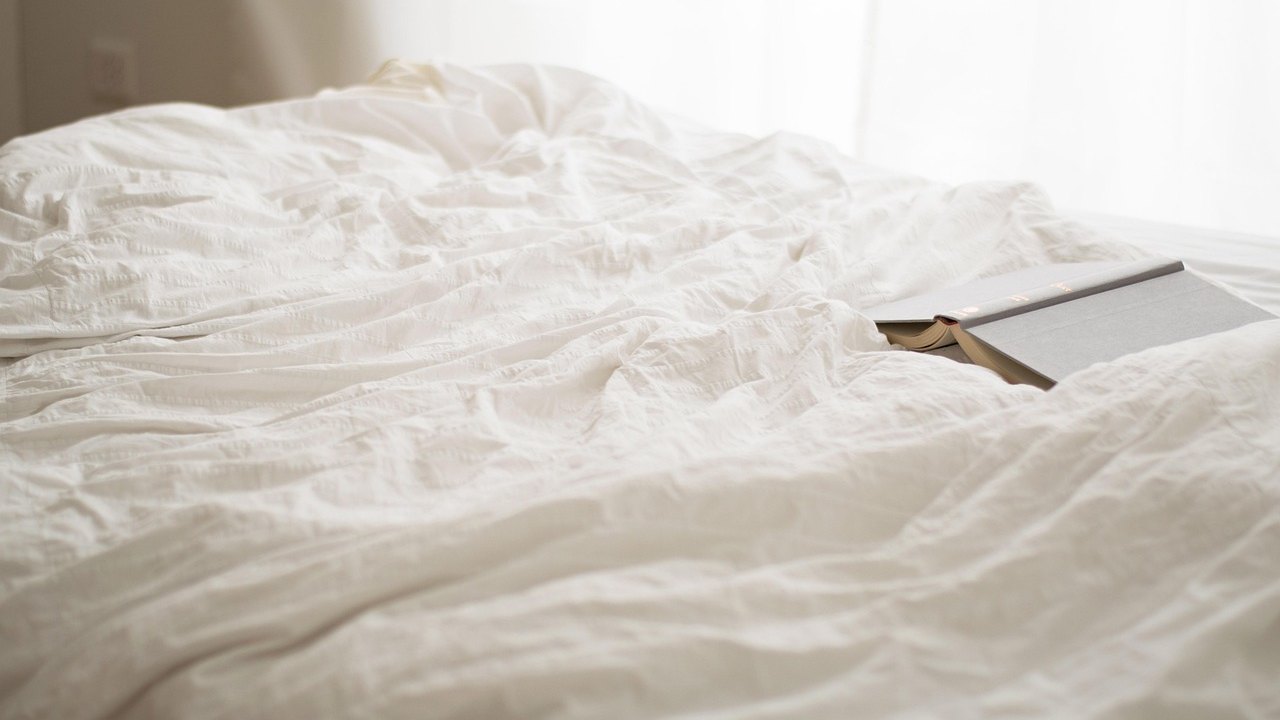
Linen wrinkles. Not slightly — comprehensively, permanently, in a way that makes a made bed look unmade. If that bothers you, do not buy it, because it is not a defect and it is not going away. It is what a fibre that has not been chemically treated does when it dries.
I thought I would mind. I did for a fortnight. Now a crisply ironed cotton bed looks slightly wrong to me, like a hotel, and the rumpled linen one looks like a bed someone actually sleeps in.