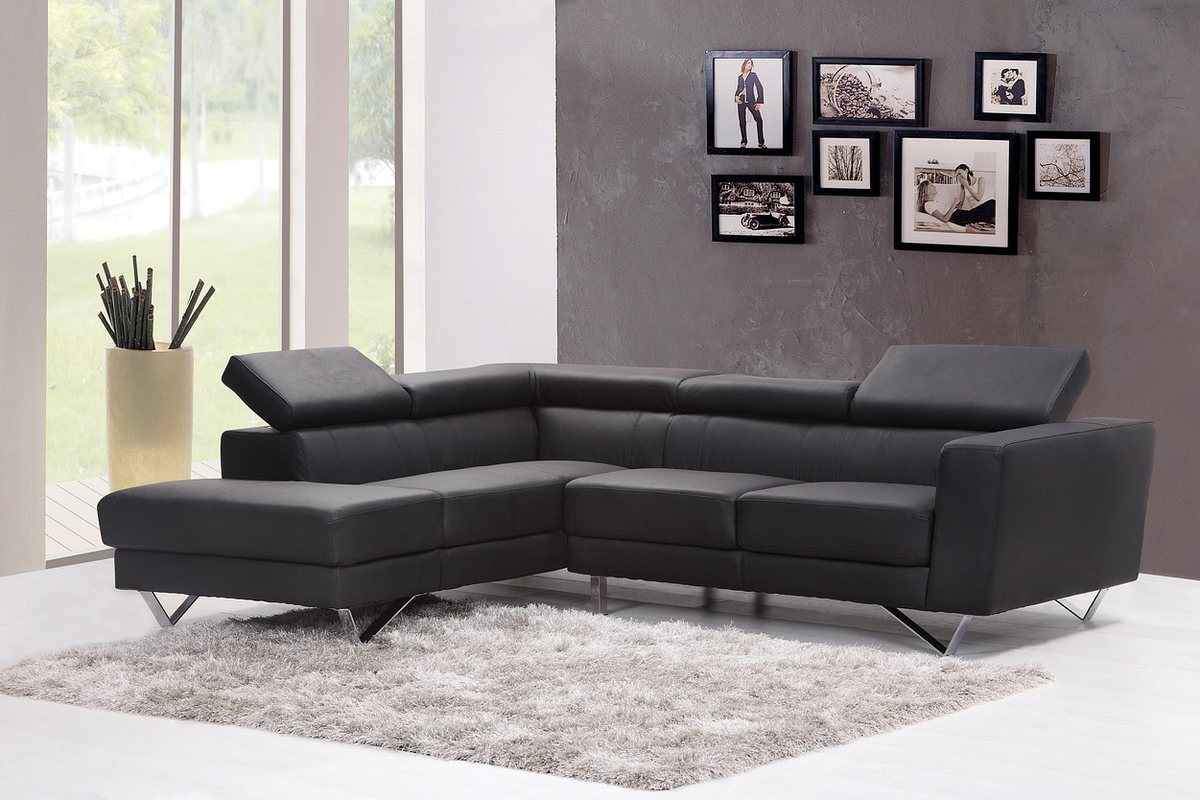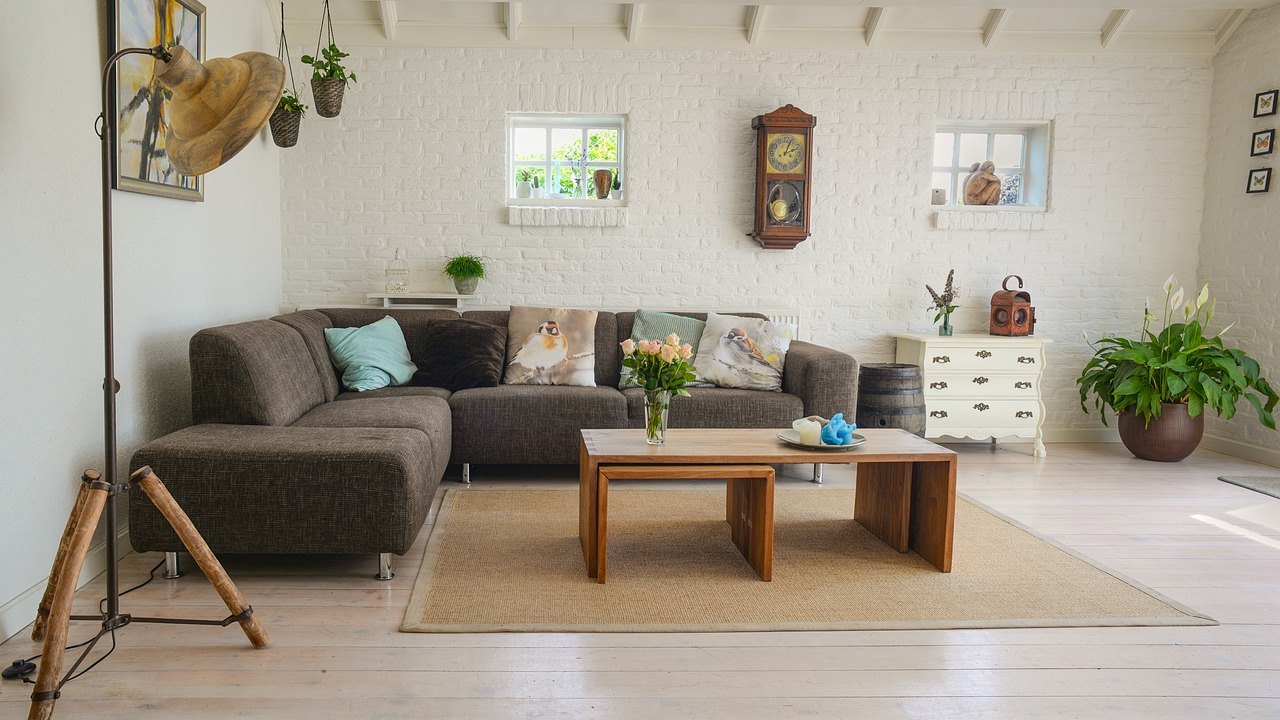
The short answer. Two weeks, and the worst of it is over in four days. Unroll it in the most ventilated room you have, vacuum both sides on day one, and do not put it in a bedroom until it has stopped smelling. Nothing you can buy makes this faster than an open window.
The rug arrived rolled, wrapped in plastic, and smelling like a tyre shop. I had ordered it for the bedroom, which is the one room in the flat with a window that opens four inches, and I unrolled it there because that is where it was going.
That was a mistake, and I knew it about an hour later.
What the smell actually is
A new rug is a stack of materials that have been compressed, dyed, and sealed in plastic for however long it spent in a warehouse. Three things come off it.
The backing. Most rugs are held together with a latex or synthetic adhesive, and that is the smell people describe as rubbery or chemical. It is the slowest of the three to go, because it is coming from inside the rug rather than off the surface.
The dye and the fibre treatment. Wool is scoured and often moth-proofed; synthetic fibre is heat-set. Both leave something behind that fades over days rather than hours.
Wool's own smell. A pure wool rug smells faintly of lanolin — sheep, essentially — for the first few days. This is the least unpleasant of the three and the one people mistake for a chemical smell because they are expecting one.
None of these need a product. All three need air movement, and time.
The first four days, in order
Day one: unroll it somewhere with a window, not in the room it is going to. If you have a spare room, a hallway, or a covered balcony, that is where it goes. If you do not, unroll it in the room it will live in and open every window for the day.
Day one, second job: vacuum both sides. The smell is on the surface as much as in the backing, and a vacuum removes loose fibre, dust from the warehouse, and the plasticiser that has settled on the pile. Do the back as well — a rug is porous and the backing is where the strongest smell is. Use the upholstery tool or a bare-floor setting so the brush bar does not chew the pile.
Days two to four: keep the air moving. An open window is the whole method. A fan pointed at the rug, not at the room, is the second-best thing. Do not bother with air fresheners, which add a smell rather than removing one, and do not cover the smell with candles — you will just have a rug that smells of rubber and vanilla.
Day four: check before you commit. Get down near the rug and smell it. If it still smells strongly, it is not ready for a bedroom. Most rugs are past the worst by this point.
Week two: it should be a background smell, then nothing. If a rug still smells strongly at three weeks, that is worth a conversation with the retailer. It happens, mostly with very cheap latex-backed rugs, and it is not something you should have to live with.
Where not to put it
Not a bedroom, in the first week. You spend eight hours in there with the window shut. Whatever your view on the smell, that is the room where it matters most and the room with the least air movement.
Not a room with one small window. Which is most bedrooms, and most converted flats. The rug will take twice as long.
Not under a bed. A rug under a bed has no exposed surface, no air under it, and no way for anything to escape. It is the slowest possible arrangement. If the rug is going under the bed eventually, break it in somewhere else first.
Not on top of a foam underlay in a warm room. Warmth speeds up the release, and foam traps it underneath. If the room is above 24°C, that is a reason to break the rug in somewhere cooler.
Underlay, and why it is not just about grip
A felt or rubber underlay is usually sold as an anti-slip measure. It does more than that.
It lifts the rug off the floor, which lets air move under the backing — the surface with the strongest smell. It also stops the backing from sitting directly against a warm floor, which is where a lot of the heat that drives the release comes from.
If you are buying a rug and an underlay at the same time, unroll the rug without the underlay for the first week, then add it. The rug settles faster with air on both sides.
If it still smells at three weeks
Three weeks is the line. Before that, more air and more vacuuming. After that, something is different and it is worth doing three things in order.
Check the underside, not the top. Smell the backing directly, close to it. If the top has settled and the back has not, the smell is in the adhesive and no amount of surface vacuuming will reach it. A rug that smells only from underneath is a rug that has not finished curing, and warmth is what is slowing it down.
Get it off the floor for a few days. Prop it over two chairs, or roll it loosely and stand it on end in a ventilated room. Air on both sides at once is the one condition a rug on a floor never gets.
Contact the retailer. A rug that still smells strongly at a month is not normal, and most retailers know it. The usual outcome is a replacement or a return, and the usual reason people do not get one is that they waited until the return window closed. Say what you have done — unrolled, ventilated, vacuumed both sides, three weeks — because that is the answer to the first question you will be asked.
What I would not do is buy a product to mask it. An odour neutraliser on a rug is a liquid going into a pile, and the pile is the part you cannot dry properly.
The question I am not going to answer
People search for whether new rug smell is harmful, and the internet will give them a confident answer in both directions. I am not going to add to that pile, because it is a health question and this is a site about how a home feels, not a medical one.
What I will say is what I do, which is a comfort rule rather than a health claim: if a room smells strongly of something new, I ventilate it, I do not sleep in it, and I do not buy a second one until it has settled. That is enough for me to make a decision with, and it does not require me to know anything about chemistry.
Would I buy the same rug again
Yes, and I would do the first week differently.
The rug itself is fine — a wool pile on a cotton backing, which is the combination that settles fastest and lasts longest. What I got wrong was the room. I put it where it was going instead of where the air was, and I spent five nights sleeping in a room that smelled like a new car.
The rule I use now: a new rug spends its first week wherever the air moves most, and its life wherever you want it. That is the whole piece of advice, and it costs nothing to follow.